Tesla Windshield Replacement in Charleston — Model 3, Model Y & Autopilot Calibration Experts
Tesla has redefined what a car can be — and their windshields are no exception. Acoustic glass comes standard, Autopilot cameras are integrated into every vehicle, and Tesla's unique approach requires specialized expertise. We provide Tesla windshield replacement throughout Charleston with proper Autopilot calibration: Model 3, Model Y, Model S, Model X, and Cybertruck.
Tesla is our fastest-growing vehicle segment. As Charleston's EV population expands, we've invested in Tesla-specific training, glass sourcing, and calibration procedures. Model 3 and Model Y are now among our most-serviced vehicles.
Tesla Autopilot & Full Self-Driving — Camera Calibration
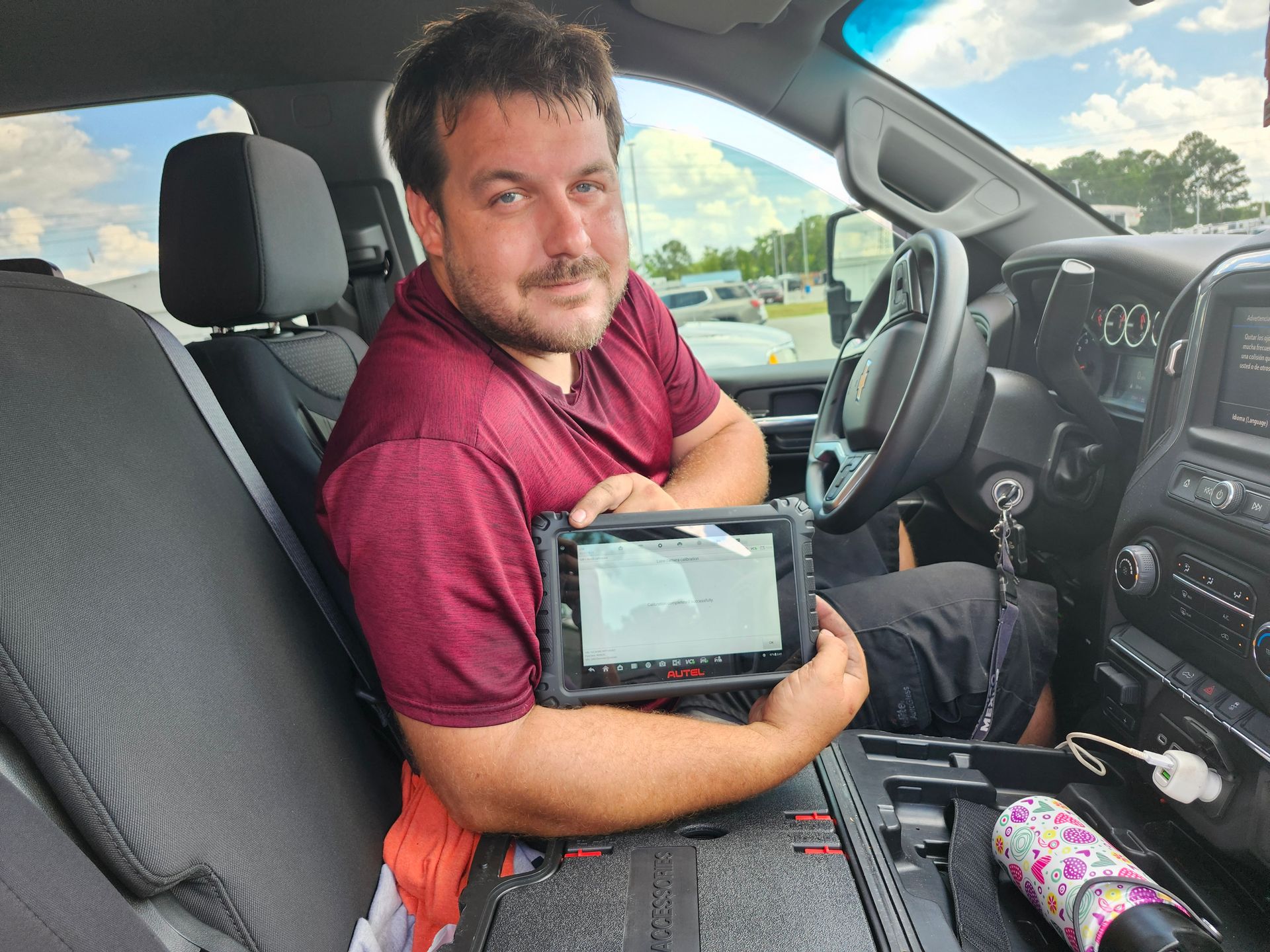
Every Tesla has Autopilot cameras — there are no base models without them. The forward-facing cameras behind the windshield power Autopilot, Traffic-Aware Cruise Control, Autosteer, and (on equipped vehicles) Full Self-Driving features. These cameras require calibration after windshield replacement.
Tesla Autopilot Calibration Requirements
| System | Tesla Autopilot / Full Self-Driving (FSD) |
|---|---|
| Camera Configuration | Multiple forward-facing cameras (varies by hardware version) |
| Calibration Type | Static, dynamic, or both — set by Tesla service information for the specific model |
| Calibration Time | 45-60 minutes (plus driving calibration may be required) |
| All Models Equipped | Yes — every Tesla has Autopilot hardware |
Post-Replacement Calibration
After windshield replacement and static calibration, Tesla vehicles may require a short driving period to complete camera calibration. The vehicle's touchscreen displays calibration status. We explain this process so you know what to expect.
Tesla Acoustic Glass — Standard on All Models
Tesla uses acoustic laminated glass on all vehicles. This sound-dampening glass reduces road and wind noise, contributing to the quiet cabin experience Tesla is known for. When replacing a Tesla windshield, using non-acoustic glass significantly increases cabin noise.
Tesla Models We Service
Tesla Model 3
Tesla's best-seller and our most-serviced Tesla. Compact sedan with standard acoustic glass and Autopilot. High Charleston concentration.
- ADAS: Autopilot standard
- Glass: Acoustic laminated
- Calibration: per Tesla service information (+ driving calibration)
Tesla Model Y
America's best-selling vehicle (all categories). Compact SUV on Model 3 platform. Very common in Charleston, especially in family communities.
- ADAS: Autopilot standard
- Glass: Acoustic laminated, larger format
- Calibration: per Tesla service information (+ driving calibration)
Tesla Model S
Flagship sedan. Larger windshield with full acoustic glass. Premium Tesla experience.
- ADAS: Autopilot standard
- Glass: Large format acoustic
- Calibration: per Tesla service information (+ driving calibration)
Tesla Model X
SUV with distinctive falcon-wing doors. Large panoramic windshield extending into the roof.
- ADAS: Autopilot standard
- Glass: Extra-large panoramic format
- Calibration: per Tesla service information (+ driving calibration)
Tesla Cybertruck
Electric truck with unique angular design. Specialty glass and calibration requirements.
- ADAS: Autopilot standard
- Glass: Unique format (availability varies)
- Calibration: Tesla-specific
Why Not Use Tesla Service?
Tesla offers windshield replacement through their service centers — but there are advantages to mobile service:
- Convenience: We come to your home or office. No need to drive to Charleston's Tesla Service Center.
- Scheduling: Tesla Service can have long wait times. We often provide same-day or next-day service.
- Insurance Direct: We handle insurance claims directly with SC's zero-deductible law.
- Same Quality Glass: We source Tesla-specification acoustic glass from quality suppliers.
- Proper Calibration: We perform Tesla-specific calibration procedures.
Static, Dynamic, and Why the Order of Operations Matters
Auto glass replacement has a written American National Standard behind it — ANSI/AGSC/AGRSS 005-2022, published by the Auto Glass Safety Council — and the 2022 revision was the first to put ADAS calibration language into the standard itself. The definitions matter to the owner of any camera-driven car, because shops use these words loosely and the standard does not.
How the Standard Defines the Terms
| Calibration | “the process by which a new Advanced Driver Assistance System component is calibrated to the manufacturer's specifications (such as when a new camera is installed)” |
|---|---|
| Recalibration | “the process by which a vehicle's Advanced Driver Assistance System is returned to the vehicle manufacturer's specifications” |
| Static | “recalibration/calibration undertaken on a stationary vehicle in a controlled environment” |
| Dynamic | “recalibration/calibration that takes place while a vehicle is driven and exposed to roadway conditions specified by the vehicle manufacturer (e.g. speed, lane markings, traffic signs, etc.)” |
| Minimum drive-away time | “the time necessary for a given adhesive system to attain minimum drive-away strength after an adhesive bonded glass part is set in place” |
Put the last two definitions side by side and a scheduling rule falls out, one that matters most on vehicles whose cameras finish calibrating on the road. Clause 8.9 of the standard requires anyone providing calibration services to “only commence Dynamic recalibrations/calibrations once the minimum drive-away time requirement has been achieved,” and to commence static work “according to the guidelines provided by the manufacturer of the adhesive used for the glass replacement.” A calibration drive that begins before the urethane has reached drive-away strength is the wrong order of operations, whatever the dash reports at the end of it.
The same clause requires that the outcome of the recalibration be provided to the vehicle's owner or operator. Clause 5.7 requires that the equipment used be purpose-built for calibration, that the procedure be OEM-approved or backed in writing as equivalent, and that the equipment only be used on vehicles specifically covered in its own database — never on models beyond the scope of its software. Clause 5.6 requires glass “compatible with the ADAS which may be affected/impacted by the glass replacement.” And clause 6.4 requires that you be told the minimum drive-away time both before and after the installation. If nobody gives you a number, ask for one; the standard says you are owed it twice.
Tesla Windshield Replacement Cost
Tesla windshield replacement costs reflect the vehicle's premium positioning:
- Acoustic Glass: Standard on all Teslas, costs more than non-acoustic.
- Model Size: Model X panoramic windshield costs more than Model 3.
- Autopilot Calibration: Required on all Teslas, included in our service.
- Glass Sourcing: Tesla-specification glass from quality suppliers.
$0 Cost for Most Tesla Owners
Under SC law, vehicles with SC-plated comprehensive coverage may qualify for $0-deductible windshield replacement — including acoustic glass and Autopilot calibration.
Where We Service Tesla Vehicles
Tesla ownership concentrates in tech-forward and affluent communities:
- Daniel Island — High EV adoption, tech-forward residents
- Mount Pleasant — Affluent early adopters
- Summerville — Growing Tesla presence in Nexton, Cane Bay
- Kiawah Island — Luxury EV ownership
- Downtown Charleston — Urban EV owners
Get a Quote for Your Tesla
Tell us your Tesla model and year. We'll confirm glass specifications and provide an accurate quote.
Acoustic glass. Autopilot calibration. Mobile service to your location.