ADAS Windshield Camera Calibration in Charleston — Safety System Recalibration

After windshield replacement, the camera near your rearview mirror needs recalibration. Lane departure warning, automatic emergency braking, and adaptive cruise control all depend on precise camera alignment. We calibrate Toyota Safety Sense more frequently than any other system in Charleston — and we have the equipment for all major manufacturers.

ADAS Calibration Certified OEM-Spec Equipment Mobile or In-Shop

What Is ADAS and Why Does It Need Calibration?

ADAS (Advanced Driver Assistance Systems) refers to the safety features in modern vehicles that help prevent accidents — lane departure warning, automatic emergency braking, adaptive cruise control, blind spot monitoring, and more. Many of these systems use a camera mounted near your rearview mirror on the windshield that "watches" the road ahead.

When you replace your windshield, the camera's position changes slightly — even by fractions of a millimeter. At highway speeds, that tiny misalignment can mean the camera "sees" the lane in the wrong place, or doesn't detect a car ahead in time. Calibration re-aims the camera to factory specifications so these systems work correctly again.

What Safety Features Depend on Windshield Camera Calibration?

  • Lane Departure Warning (LDW) — alerts you when drifting out of lane
  • Lane Keeping Assist (LKA) — gently steers you back into lane
  • Forward Collision Warning (FCW) — alerts you to an impending crash
  • Automatic Emergency Braking (AEB) — applies brakes automatically
  • Adaptive Cruise Control (ACC) — maintains safe following distance
  • Traffic Sign Recognition — displays speed limits on dashboard
  • High Beam Assist — automatically dims headlights

For more information on automated vehicle safety systems, see the NHTSA automated vehicle safety guidelines.

What Happens If You Skip ADAS Calibration?

Your safety systems may not work correctly — or may work dangerously wrong.

  • Lane Keeping Assist might steer you the wrong way — if the camera thinks the lane is offset, it will try to "correct" you toward the wrong position
  • Emergency Braking might not activate in time — or might activate when nothing is there (phantom braking)
  • Adaptive Cruise might not detect the car ahead — maintaining speed when it should be slowing down
  • You'll likely see warning lights on your dashboard — the system knows something is wrong

Subaru's EyeSight is the most calibration-sensitive system we encounter. Its dual-camera stereo vision is particularly intolerant of misalignment. We've seen vehicles come in with EyeSight disabled entirely because previous shops skipped or botched calibration.

Does Your Vehicle Need ADAS Calibration After Windshield Replacement?

Probably yes, if your vehicle is 2018 or newer. Based on our service data, 73% of 2020+ vehicles require calibration. Here's how to tell if yours does:

  • Look at your windshield near the rearview mirror — do you see a camera housing?
  • Does your vehicle have lane departure warning, adaptive cruise, or automatic braking?
  • Check your dashboard — are there icons for lane assist, collision warning, or similar?

When you give us your vehicle information, we'll confirm whether calibration is required and what type is needed for your specific make and model.

Vehicles That Commonly Require Calibration

How Much Does ADAS Calibration Cost?

Static Calibration $175-$275 Most common type — uses precision targets
Dynamic Calibration $125-$200 Requires road test — some Mazdas, others
Dual Calibration $250-$350 Some vehicles require both procedures
Is ADAS calibration covered by insurance?

Usually yes. Most insurance companies cover ADAS calibration as part of a windshield replacement claim because it's required to restore the vehicle to original working condition. We document the calibration requirement and include it in the claim.

We verify coverage before proceeding and let you know if there's any out-of-pocket cost.

What Is the Difference Between Static and Dynamic Calibration?

Static Calibration

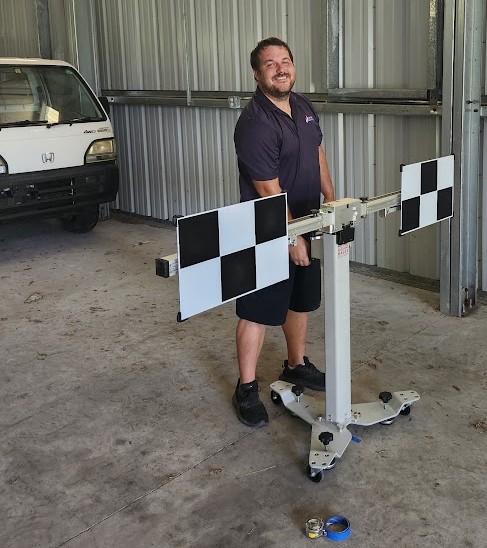
Uses precision-mounted targets positioned at exact distances and heights in front of the vehicle. The camera system scans the targets and adjusts its "understanding" of center, lane position, and distance.

  • Requires level ground and controlled lighting
  • Takes 30-45 minutes
  • Most common calibration type
  • Used by Toyota, Honda, Subaru, most others
Dynamic Calibration

Requires driving the vehicle on specific road types (usually straight highway) while the system recalibrates based on real-world input.

  • Requires 15-30 minutes of driving
  • Specific road conditions required
  • Less common — some Mazdas and others
  • Sometimes required in addition to static

How Does Our ADAS Calibration Process Work?

  1. Pre-Scan

    Before removing your old windshield, we scan your vehicle's ADAS systems to document current status and identify any pre-existing issues.

  2. Windshield Replacement

    We replace your windshield using precise positioning for the camera mount. Camera location must be exact for calibration to work correctly.

  3. Target Setup (Static)

    For static calibration, we position precision targets at exact manufacturer-specified distances and heights. Ground must be level and lighting controlled.

  4. Calibration Procedure

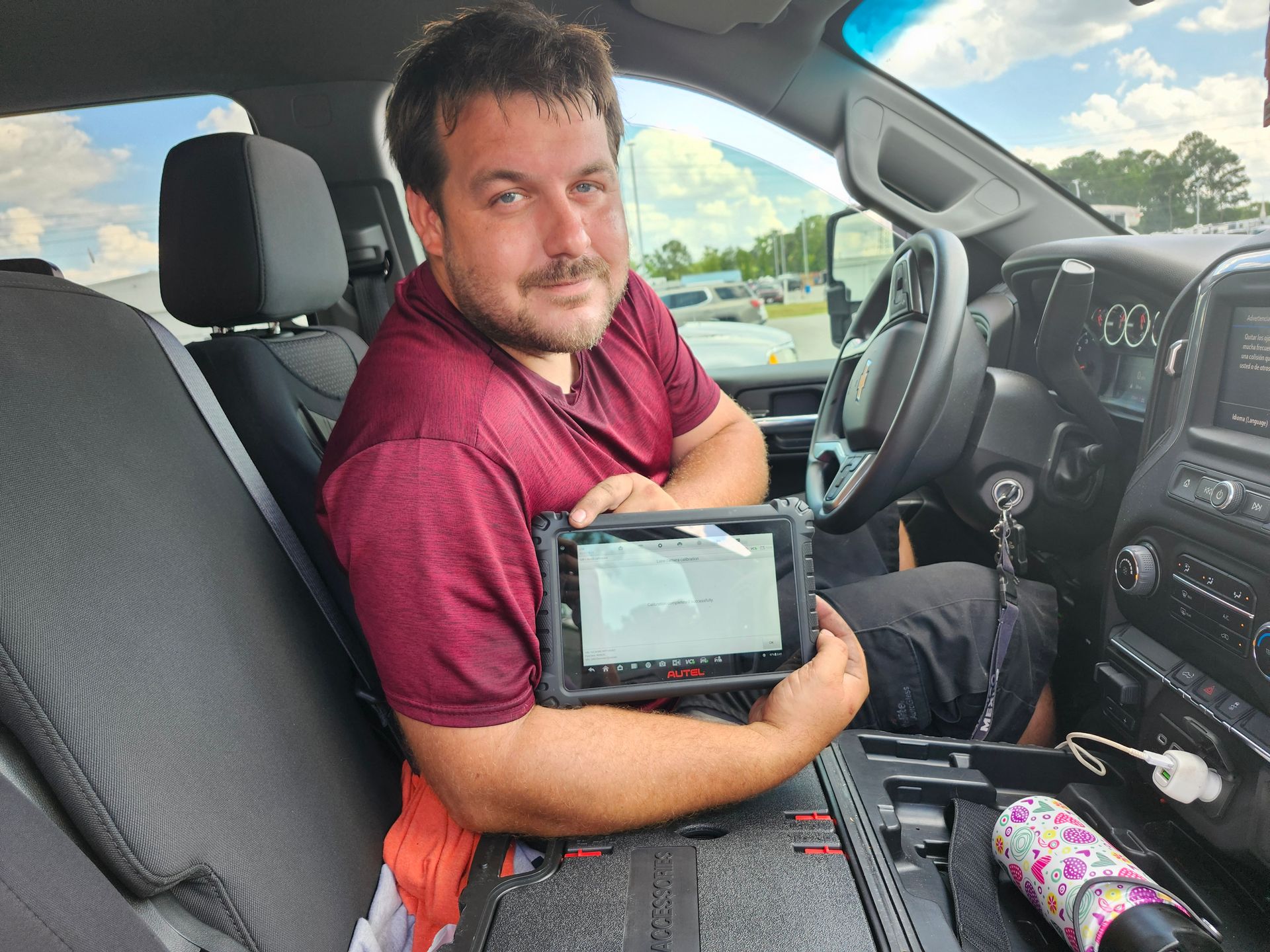
    Using OEM or equivalent diagnostic tools, we run the manufacturer's calibration procedure. The camera system scans the targets and adjusts its reference points.

  5. Post-Scan Verification

    We scan the system again to verify calibration completed successfully and no fault codes remain. You get documentation of the completed calibration.

ADAS Calibration Questions

Can I Skip ADAS Calibration to Save Money?

We strongly recommend against it — and here's why it's not really "saving" anything. Your safety systems exist to prevent accidents. If they're not calibrated, they may not work — or may work incorrectly in ways that cause accidents. The cost of calibration is trivial compared to the cost of a collision that your emergency braking system failed to prevent.

How Long Does ADAS Calibration Take?

Static calibration takes 30-45 minutes after windshield installation. Dynamic calibration requires an additional 15-30 minutes of driving. Combined with windshield replacement, plan for 2-3 hours total for ADAS-equipped vehicles.

Can Any Auto Glass Shop Do ADAS Calibration?

Most reputable shops can, but quality varies. ADAS calibration requires specialized equipment (targets, scan tools, diagnostic software) and proper training. While most established auto glass shops now offer calibration, the experience and precision matter — improper calibration can leave your safety systems inaccurate. We've invested in the latest equipment and training to ensure your calibration is done right the first time.

What If Calibration Fails?

Calibration can fail if there are other issues — damaged sensors, software problems, or pre-existing system faults. Our pre-scan identifies most issues before we start. If calibration won't complete, we diagnose the cause and discuss options. You won't be charged for calibration that doesn't succeed.

Need Windshield Replacement With ADAS Calibration?

We handle both in one appointment — replacement and calibration. Tell us your vehicle make and model for a complete quote.

Ready for Your Free Quote?

Most Charleston drivers with insurance pay $0 out of pocket. We verify your coverage and handle the claim — you just tell us where to show up.

(843) 810-8913