The Complete Guide to ADAS and Windshield Camera Calibration
If your vehicle was made after 2015, there's a good chance it has a camera mounted near your rearview mirror. That camera powers safety features you might use every day without thinking about them — and after windshield replacement, it needs to be recalibrated to work correctly. This guide explains what ADAS is, why calibration matters, and what you need to know as a Charleston driver.
What Is ADAS?
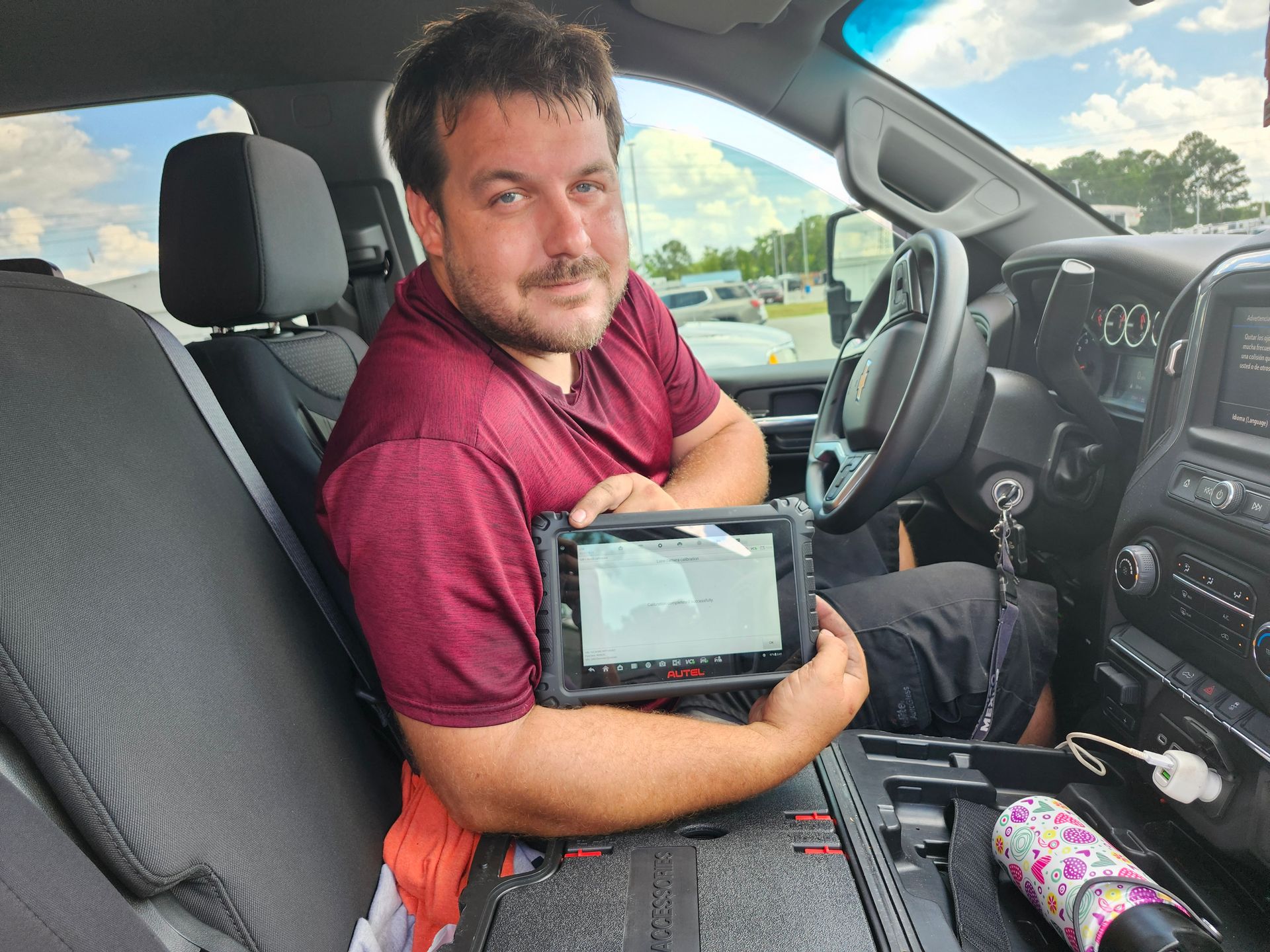
ADAS (Advanced Driver Assistance Systems) is a category of vehicle safety features that use cameras, radar, and sensors to help drivers avoid accidents. These systems can warn you of hazards, assist with steering, and in some cases, take automatic action to prevent collisions.
You've probably experienced ADAS features without knowing the technical name. That beep when you drift out of your lane? ADAS. The car automatically keeping a set distance from the vehicle ahead on cruise control? ADAS. The warning that flashes before you're about to rear-end someone? Also ADAS.
These aren't luxury features anymore. As of 2025, most new vehicles sold in the United States include at least basic ADAS functionality as standard equipment. If you bought a new car in the last five years, you almost certainly have some version of these systems.
Common ADAS Features
Here are the ADAS features we see most often in Charleston vehicles:
- Lane Departure Warning (LDW)
- Alerts you when your vehicle begins to drift out of its lane without a turn signal activated. Usually a visual warning on the dashboard plus a beep or vibration.
- Lane Keeping Assist (LKA)
- Goes beyond warning — applies gentle steering input to guide your vehicle back into the lane. More active than LDW.
- Forward Collision Warning (FCW)
- Detects when you're approaching another vehicle too quickly and warns you to brake. Critical for highway driving and stop-and-go traffic.
- Automatic Emergency Braking (AEB)
- If forward collision warning doesn't prompt you to brake in time, AEB applies the brakes automatically. Can reduce crash severity or prevent collisions entirely.
- Adaptive Cruise Control (ACC)
- Maintains a set following distance from the car ahead, automatically slowing down and speeding up with traffic. Makes highway driving much less fatiguing.
- Traffic Sign Recognition
- Reads speed limit signs and displays them on your dashboard. Some systems warn you if you're exceeding the posted limit.
- High Beam Assist
- Automatically switches between high and low beams based on oncoming traffic and ambient light conditions.
How ADAS Uses Your Windshield
Most ADAS features rely on a forward-facing camera mounted to the inside of your windshield, typically near the rearview mirror. This camera continuously captures the road ahead and feeds that visual data to your vehicle's computer systems.
The camera needs to "see" through your windshield clearly and at a precise angle. The position is calibrated at the factory to within fractions of a degree. When the windshield is replaced, that precise positioning is lost — the new glass, even if it looks identical, sits in a slightly different position than the original.
A miscalibrated camera might see the lane markings at a different angle, judge distances incorrectly, or fail to recognize traffic signs. The system doesn't know it's miscalibrated — it just provides incorrect information. That's why calibration after windshield replacement isn't optional for ADAS-equipped vehicles.
What Is ADAS Calibration?
ADAS calibration is the process of resetting and realigning your vehicle's camera and sensor systems after windshield replacement, collision repair, or other work that may have affected their positioning. Without calibration, these systems won't provide accurate data and won't function correctly.
Think of calibration like zeroing a rifle scope. The scope might be perfectly functional, but if it's not aligned with the barrel, you'll miss your target. ADAS calibration aligns the camera's "view" with the vehicle's actual position and orientation.
The calibration process varies by vehicle manufacturer and system type, but it generally involves using specialized equipment to present known targets or patterns to the camera, then adjusting the system's software until the camera correctly interprets what it sees.
When Calibration Is Required
ADAS calibration is required after:
- Windshield replacement — The most common trigger. New glass = new calibration.
- Camera removal or replacement — If the camera itself is serviced or replaced.
- Front-end collision repair — Even minor bumper work can shift sensor positions.
- Wheel alignment — On some vehicles, alignment changes affect ADAS reference points.
- Suspension work — Ride height changes can alter camera angles.
- Software updates — Some manufacturer updates require recalibration.
Some vehicles will display a warning light or message when calibration is needed. Others won't give any indication — the systems just quietly provide incorrect data. We recommend calibration after any windshield replacement on ADAS-equipped vehicles, regardless of whether a warning appears.
Types of ADAS Calibration
There are three main approaches to ADAS calibration. The type required depends on your vehicle's manufacturer and the specific ADAS systems installed.
Static Calibration
Static calibration is performed in a controlled environment — typically a shop or garage — using precision targets mounted on stands at specific distances and heights from the vehicle.
How Static Calibration Works
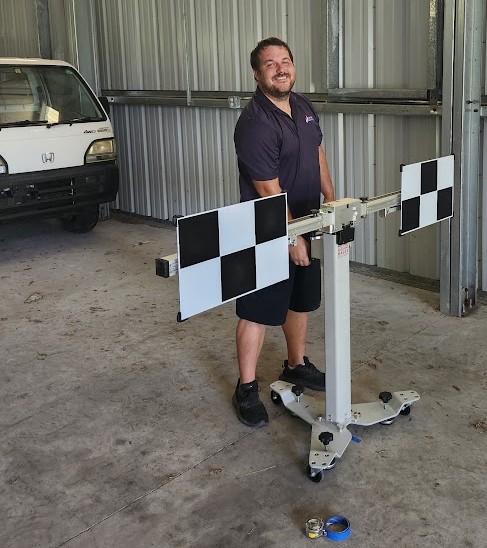
The vehicle is positioned on a level surface with targets placed at manufacturer-specified distances (usually 10-20 feet from the front of the vehicle). The calibration equipment connects to the vehicle's diagnostic port and guides the camera through a series of recognition tests. The technician adjusts the system until the camera correctly identifies the targets' positions.
Requirements for Static Calibration
- Level floor surface
- Controlled lighting (no direct sunlight or glare)
- Adequate space for target placement
- Vehicle-specific targets and mounting equipment
- Diagnostic scan tool with calibration software
Static calibration typically takes 30-45 minutes once the vehicle and equipment are positioned.
Dynamic Calibration
Dynamic calibration is performed while driving the vehicle on public roads. The system uses real-world lane markings, road features, and traffic to calibrate the camera.
How Dynamic Calibration Works
A diagnostic tool is connected to the vehicle, then the technician drives a specific route — typically 10-20 miles of highway driving with clear lane markings. The system "learns" by comparing what the camera sees to expected patterns, adjusting its algorithms until readings are consistent.
Requirements for Dynamic Calibration
- Clear weather conditions
- Well-marked roads (clear lane lines)
- Moderate traffic density
- Specific speed requirements (usually 35-65 mph)
- Straight road sections for initial calibration
Dynamic calibration can take anywhere from 20 minutes to over an hour depending on traffic conditions and system requirements.
Dual Calibration
Some vehicles require both static and dynamic calibration — a static procedure in the shop followed by a dynamic procedure on the road. This is most common in vehicles with multiple camera systems or particularly sophisticated ADAS features.
Subaru EyeSight, for example, uses dual forward-facing cameras that require static calibration first, then a dynamic verification drive.
ADAS Systems by Manufacturer
Every major manufacturer has their own branded ADAS suite. The names are different, but the underlying technology is similar. Here's what we see most often in Charleston:
Toyota Safety Sense (TSS)
Toyota's ADAS suite comes in two versions: TSS 2.0 (most current) and the original TSS-P/TSS-C (2015-2019 models). Both require static calibration after windshield replacement. The system uses a single camera plus millimeter-wave radar.
Common features: Pre-Collision System, Lane Departure Alert, Automatic High Beams, Dynamic Radar Cruise Control.
More about Toyota windshield replacement →
Honda Sensing
Honda's system uses a monocular camera combined with radar. Calibration is typically static and takes about 30 minutes. Honda Sensing has been standard on most Honda and Acura vehicles since 2019.
Common features: Collision Mitigation Braking, Road Departure Mitigation, Adaptive Cruise Control, Lane Keeping Assist.
More about Honda windshield replacement →
Subaru EyeSight
Subaru's dual-camera system is one of the most sophisticated on the market — and one of the most calibration-sensitive. EyeSight requires both static calibration with specific Subaru targets and a dynamic verification drive. The dual cameras provide depth perception that single-camera systems lack.
Common features: Pre-Collision Braking, Adaptive Cruise Control, Lane Centering, Lane Departure Warning.
More about Subaru windshield replacement →
Ford Co-Pilot360
Ford's ADAS suite has become standard across most of their lineup. Calibration requirements vary by model — F-150 calibration is different from Escape calibration. Most require static calibration.
Common features: Pre-Collision Assist, Blind Spot Information System, Lane-Keeping System, Auto High-Beam Headlamps.
More about Ford windshield replacement →
Tesla Autopilot
Tesla vehicles use multiple cameras positioned around the vehicle, with the primary forward cameras mounted behind the windshield. Tesla calibration is primarily static but can be finicky — the system sometimes requires multiple calibration attempts and a subsequent "learning" drive.
Common features: Autosteer, Traffic-Aware Cruise Control, Auto Lane Change, Autopark, Full Self-Driving (Beta on some vehicles).
More about Tesla windshield replacement →
Other systems we calibrate: Chevy Safety Assist, Nissan ProPILOT, Hyundai/Kia SmartSense, and luxury brands including BMW, Mercedes, Audi, and Lexus.
What Happens After Windshield Replacement
When we replace a windshield on an ADAS-equipped vehicle, calibration is part of the service. Here's what to expect:
- Pre-installation scan: Before removing the old windshield, we scan the vehicle's systems to identify what ADAS features are present and document any existing fault codes.
- Careful removal: The camera housing and mounting hardware are preserved during windshield removal. These components are transferred to the new glass.
- New windshield installation: The replacement glass is installed with factory-spec adhesive. We take extra care with camera-mounting areas for proper positioning.
- Component reinstallation: The camera and any sensors are reinstalled in their housings on the new windshield.
- Calibration: Using manufacturer-approved equipment, we calibrate the camera system according to the vehicle's specific requirements.
- Post-calibration verification: We verify calibration success through the diagnostic system and, when required, a test drive.
- System check: A final scan confirms all ADAS features are functioning and no fault codes remain.
The total appointment time for windshield replacement plus calibration is typically 2-3 hours. We handle everything on-site — you don't need to take your vehicle anywhere else.
ADAS Calibration FAQ
How Do I Know If My Car Has ADAS?
Look near your rearview mirror. If there's a camera housing (usually a black plastic box or cover), your vehicle has a forward-facing camera that likely requires calibration. You can also check your dashboard for icons related to lane keeping, collision warning, or adaptive cruise control. When in doubt, tell us your year, make, and model — we can confirm what systems your vehicle has.
What Happens If I Don't Calibrate After Windshield Replacement?
Your ADAS features will be unreliable at best, dangerous at worst. Lane keeping might nudge you toward a guardrail instead of away from it. Collision warning might trigger late or not at all. Adaptive cruise might misjudge distances. Some systems may disable themselves; others continue operating incorrectly without warning.
Does Insurance Cover ADAS Calibration?
Usually yes. Most insurance companies recognize that calibration is a necessary part of windshield replacement on modern vehicles. We include calibration in the insurance claim when applicable. In rare cases, an insurer may question the charge — we provide documentation showing the manufacturer's calibration requirement.
How Much Does ADAS Calibration Cost?
When paid out of pocket (not through insurance), calibration typically runs $150-$300+ depending on the vehicle and system type. Dual-calibration vehicles (like Subaru EyeSight) are at the higher end. When combined with windshield replacement through insurance, calibration is usually covered at no additional cost to you.
Can Any Shop Calibrate ADAS?
No. ADAS calibration requires specialized equipment, manufacturer-specific targets, and training. Many glass shops don't have calibration capability and either skip it (hoping you won't notice) or send you elsewhere for a second appointment. We handle calibration in-house because we believe it's irresponsible to replace a windshield without completing the required calibration.
Will My Car Tell Me If Calibration Is Needed?
Sometimes. Some vehicles display a warning light or message when ADAS systems detect an issue. Others don't. Absence of a warning doesn't mean calibration isn't needed — it often just means the system doesn't know it's miscalibrated. We recommend calibration after every windshield replacement on ADAS-equipped vehicles, regardless of warning lights.